Table of contents
It looks effortless on social media, but guides see the missteps up close: hikers who bring a single water bottle for a full-day ridge, kayakers who underestimate wind, and first-timers who don’t realize a “moderate” label can still mean hours of sustained effort. As adventure travel rebounds, with operators from the Alps to the fjords reporting strong demand for small-group experiences, the gap between expectations and reality is one of the biggest safety issues on the ground. The good news is that most problems are preventable, if you know what to ask before you book.
“Moderate” doesn’t mean the same thing everywhere
Tour descriptions are marketing tools, not medical assessments, and one of the most common sources of disappointment, and occasionally accidents, is the word “moderate.” In guiding terms, difficulty is a mix of distance, elevation gain, terrain, weather exposure, and the pace required to fit the route into daylight and logistics. A four-hour hike with 600 meters of ascent on stable paths is not the same as four hours on wet rock, loose scree, or narrow ridgelines where every step demands attention, and yet both can end up described with the same adjective.
Guides also know that “moderate” changes with context. In coastal Norway, for example, wind chill can turn a benign viewpoint walk into a cold-management exercise, and in shoulder seasons, slippery ground and early darkness can increase the technicality of an outing without changing the distance on paper. The industry has tried to standardize ratings, but there is no global scale with universal enforcement, so the most reliable strategy is to interrogate the specifics: total elevation gain, expected moving time, maximum altitude, and what “stops” really mean. A trip that includes “photo breaks” every 20 minutes can feel leisurely, while a “steady pace” can mean a continuous push where you only pause when the group reaches a checkpoint.
If you want a clear self-check, ask two questions that cut through the labels: “What’s the longest continuous uphill section?” and “What time do we expect to be back, door to door?” The first reveals whether you’ll be climbing for 10 minutes or 90, and the second exposes the full commitment, including transfers, kit-fitting, and the reality that most itineraries run longer than the headline duration. Finally, be honest about your baseline: guides routinely see guests who are fit in the gym but untrained for uneven surfaces, and the stabilizer fatigue from rocky terrain can be a surprise even for runners.
Weather is not a footnote, it’s the main character
Ask any guide what determines the day’s plan, and the answer is usually not the group’s enthusiasm, it’s the forecast, and more importantly, the local micro-forecast. Mountains create their own systems, water amplifies gusts, and urban-adjacent wilderness can still feel remote when a squall rolls through. Many travellers check the weather once, then pack based on that single number, but guides think in ranges: what happens if the temperature drops 8°C, if rain becomes sleet, or if wind turns an exposed section into a no-go zone?
Even in destinations perceived as “mild,” the combination of damp air and wind can drain body heat quickly. Hypothermia is not a polar-only problem; it is a wet-and-windy problem, and it can appear at temperatures that look safe on a smartphone. Guides therefore prioritize layers, not bulk: a moisture-wicking base, an insulating mid-layer, and a windproof, waterproof shell, plus gloves and a hat even in months when tourists wear light jackets in town. On water, the risk profile shifts again, because immersion changes everything, and the effective cold exposure is not what you feel at the launch point but what you’d experience if you tipped or got splashed repeatedly.
There is also the issue of visibility and decision-making. Rain and fog reduce contrast, which makes trail navigation harder and increases the chance of missteps, and high winds can create a domino effect where one participant’s instability raises the group’s overall risk. The best operators build “Plan B” into the schedule: alternate routes, earlier turn-around times, and the authority to cancel without negotiation. As a traveller, you should treat that as a sign of professionalism, not a lack of ambition. When you book, ask what triggers a change of plan, whether there is a minimum gear requirement, and how cancellations are handled; if the policy is opaque or punitive, it can pressure people into continuing when they should stop.
Your gear matters more than your courage
Confidence is cheap, and blisters are not. Guides say the most avoidable pain point in adventure activities is improper footwear and poorly chosen clothing, because discomfort degrades judgement, and judgement is what keeps a day fun instead of frightening. For hikes, shoes with worn tread on wet stone can be the difference between a controlled step and a fall, and for winter outings, socks that trap moisture can lead to cold injuries long before someone feels “in trouble.” The same logic applies on the water: a jacket that restricts movement, or a life vest that rides up, will exhaust a beginner quickly.
People also overpack the wrong things. A heavy backpack filled with extra gadgets can slow the group and strain knees, while missing essentials like a headlamp, a dry bag, or quick-access snacks. Guides tend to recommend a simple checklist built around failure points: what keeps you warm if you stop moving, what keeps you hydrated if the pace rises, and what keeps you visible if light drops. A small first-aid kit is useful, but the real “medical” item is often tape for hotspots, because preventing blisters is easier than treating them. For longer outings, electrolyte mix can help, particularly when exertion is high or when cold weather masks thirst.
One practical step that guides wish more people took is a pre-trip fit test. Put on your socks and shoes, load your pack with the weight you expect to carry, then walk stairs and uneven ground for 20 minutes. If something rubs at minute 10, it will hurt at hour three. For technical activities, ask what equipment is provided and what you must bring, and do not assume that “provided” means “fits everyone.” A reputable operator will have size ranges and spares, and will tell you if certain personal items are non-negotiable. If you want a sense of what well-run outfitting looks like, browse how dedicated local operators structure their practical information, for example https://www.oslo-spirit.com/, where the emphasis is on clear expectations rather than bravado.
Pick the guide, not just the activity
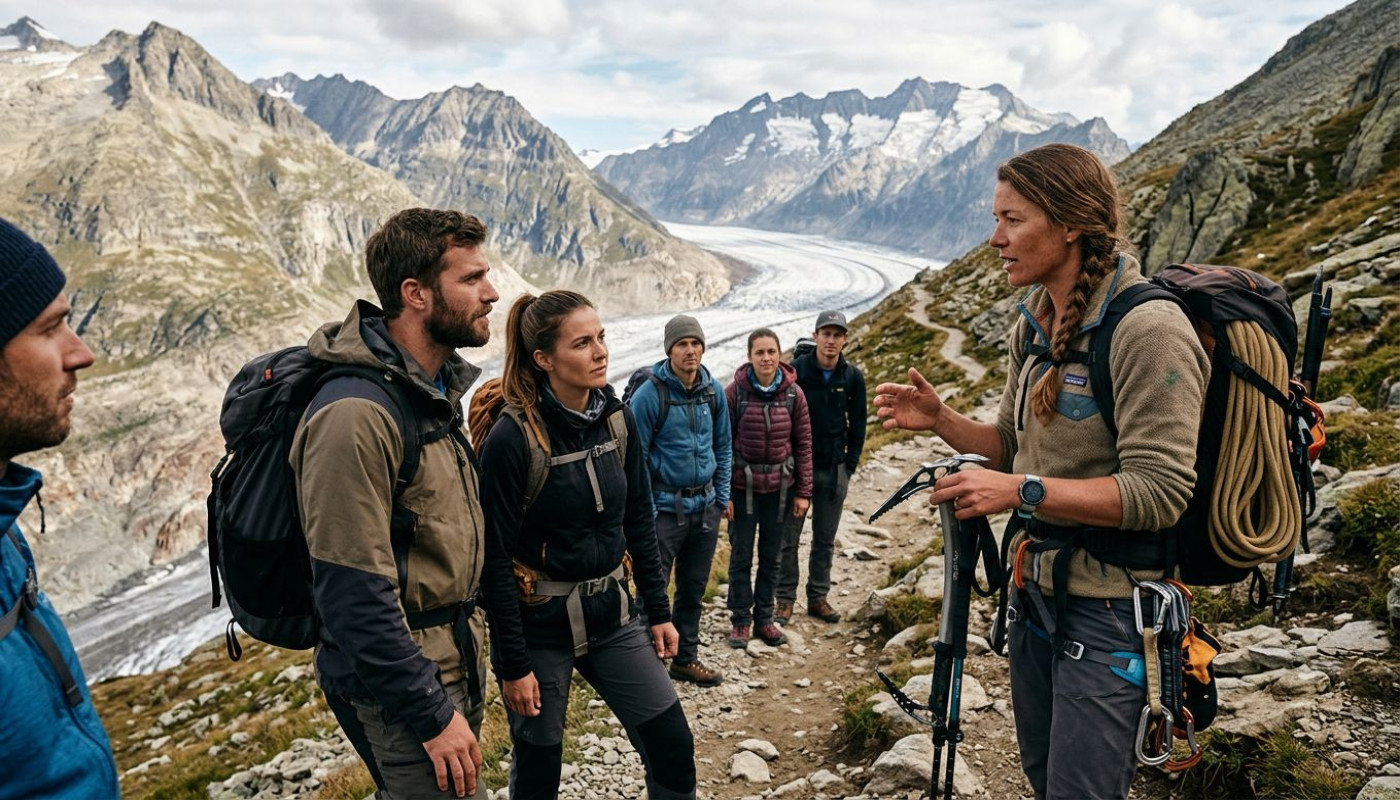
The activity is the headline, but the guide is the experience. Two groups can take the same route and come back with entirely different stories, because guiding is not only about leading the way, it is about pacing, reading the room, anticipating fatigue, and adjusting the plan before minor issues escalate. The best guides communicate continuously, and not in a patronizing way; they explain why a detour matters, they normalize questions, and they set a tone where people feel safe admitting they are struggling. That candor is not a mood-killer, it is a safety tool.
So how do you evaluate quality before you show up? Start with credentials, but don’t stop there. Certifications, first-aid training, and local licensing matter, yet professionalism also shows up in the small details: a clear gear list, realistic time windows, and an explicit statement that the guide can change the plan. Reviews are useful, but read for specifics: did people mention briefing quality, group management, and how problems were handled, or only that the scenery was “beautiful”? Scenery is rarely the variable; leadership is.
Group size is another overlooked factor. Smaller groups generally allow more coaching, faster adjustments, and fewer “weakest-link” dynamics, while larger groups can be fine if there is a strong guide-to-guest ratio and a structured plan. Ask how many participants are typical, whether there is an assistant guide, and how the operator handles mixed abilities. Finally, check what happens if you need to stop. Is there a safe exit point, a vehicle backup, or a contingency route? Responsible operators have thought this through, and they will answer without defensiveness.
Before you book, ask three practical questions
To make your next adventure safer, more comfortable, and more enjoyable, treat booking like a short interview. Ask what the day’s hardest physical segment is, what the cancellation and weather-change policy looks like, and what gear is mandatory versus recommended. Budget for proper layers and footwear, and if you are travelling in regions with seasonal offers, check for local discounts or youth rates. Reserve early for peak weekends, and keep one flexible day in your itinerary so weather can work with you, not against you.
Similar articles

What Your Travel Itinerary Reveals About Your Cultural Curiosity
Why Your Next Travel Itinerary Needs More Spontaneity
Is An Excursion Off The Beaten Path Worth The Risk?
Missing Out: How Overlooked Activities Can Define Your Travel Experience
Exploring The Top Trends In Freeride Sports Equipment?
Exploring Hidden River Gems: Unveiling Lesser-Known Adventure Spots

How To Choose The Perfect Catamaran For Your Sailing Trip?
